The Wisdom of the Ant

When Solomon became king, God came to him in a dream and asked Solomon what he wanted.  Solomon asked for wisdom and understanding.  God said He would give Solomon a wise and understanding heart.  So, God taught Solomon a great many things to the end that the proverbs of Solomon numbered in the thousands.

One of the lessons that God taught Solomon was about diligence as opposed to being lazy.  In teaching Solomon, God many times contrasted the two sides of a subject.  In this case, diligence with being lazy or slothful.

Once Solomon learned the lessons, God had him write them down.  In teaching Solomon about diligence, one of the examples God used was the illustration of the ant.

Proverbs 30:24,25 There be four things which are little upon the earth, but they are exceeding wise: The ants are a people not strong, yet they prepare their meat in the summer;

Proverbs 6:6-8 Go to the ant, thou sluggard; consider her ways, and be wise: Which having no guide, overseer, or ruler, Provideth her meat in the summer, and gathereth her food in the harvest.

Instruction coupled with understanding and wisdom comes from considering what God has said.

Israel was an agrarian society and spent much of its time outdoors, thus, many of the illustrations Jesus used to teach spiritual principles were things commonly found in nature:  wolf and sheep, vines and branches, birds, lilies, etc.  In the two verses above, God teaches Solomon about diligence by way of the ant. The ant illustrates practical diligence.

Solomon wrote:  Having no captain or ruler, provides her supplies for the summer and gathers her food for the harvest.  In other words, the ant prepares for the coming winter very diligently.

Another example is found in 1 Peter 5:8. Our “adversary the devil prowls around like a roaring lion seeking someone to devour.” Our adversary would like nothing better than to steal or devour the prosperity God desires for you. Part of our defense is to learn, believe, and do what God has said in His Word.

If we think about the ant, the main event the ant must be concerned about is the approaching winter when there will be no food for the gathering, and she will freeze if she goes outside. She provides for her children by storing up food.  Storehouses.  She stores food for the approaching winter and spring.  She stores food for her babies.  She stores extra food in case of a long winter.  She stores up even more food in case part of her supplies are destroyed.

How does that relate to us?  In preparing for the future, we may need to store money for our retirement, our children’s education or to put them in business.  We may need to store money for a downturn in the economy like Joseph stored up for the seven years of famine. We may need to store money for broken appliances, car repairs or new cars, accidents or health issues.

One of the great things about believing and doing what God teaches us here is that we are not alone in the preparation.  As we believe His Word, God will provide us with even more.  As the verse says, “to those that have, more shall be given.”

Now in the summer, to all appearances did it look like the ant needed to have a large supply of food? NO! There was food everywhere, a paycheck every week. Our tendency as people is to think that tomorrow will be just like today. Sunny with plenty to eat. Why save?!

But the wisdom of God is to save for the future.

We have no idea what will come up tomorrow or next week or next year.  We tend to think, that what it is like today will last forever, but that is not the way of life.  Winters always come and in many different forms.

Many years ago, I worked in construction, and one day, we had no work to do and none on the horizon.  I asked around what the problem was.  The Fed had raised the interest rates by 2% to curb inflation.  The people that wanted to buy certain houses no longer qualified.  Builders could not sell their houses and construction came to a halt.  We had no money in a storehouse.  We did not even know the lessons God had for us in considering the ant.  If my wife had not been working, we would have been in terrible shape. You may ask about tithing. I have faithfully tithed all my life from the time I was about 10 or 12.  However, I did not learn about the storehouse principle or saving money until much later in life.  When I did learn about it, this changed our lives.

Many things in life go in cycles just like the seasons. Wintertime always comes, but there is always a spring just around the corner where you can plant again.  If the winter of your life has been rough, this time be more diligent.

Learn to save as much as possible, get out of debt, pay cash, or don’t buy it.

So, the ant knowing there is not an obvious need at the moment gathers and stores up for the time when she will need it. God said, “Be wise and study the ant.”  He knew what we would learn if we were interested.

‘To work today is to eat tomorrow.’ ‘Beware of winter before it comes.’

In looking at this topic of being diligent and saving money we need to briefly consider the warnings of Jesus in the gospels.  They have been used to teach that it is wrong to save money. They say that by saving money you no longer trust that God will meet your needs. By saving money, they say you are acknowledging in your mind that God may not always take care of you, so you need to store up treasure on earth for yourself which indicates that you are being selfish and unbelieving.

Matthew 6:19-21 Lay not up for yourselves treasures upon earth, where moth and rust doth corrupt, and where thieves break through and steal: But lay up for yourselves treasures in heaven, where neither moth nor rust doth corrupt, and where thieves do not break through nor steal: For where your treasure is, there will your heart be also.

So, what are the treasures in heaven we are to lay up?

Luke 12:13-21 is another of those records.  The last verse reads as follows.

Luke 12:21 So is he that layeth up treasure for himself, and is not rich toward God.

To lay up treasure in heaven and to be rich towards God is to trust Him and to believe His Word.  Trust in God is the great treasure that we are to store up.  If we trust God, we will believe His Word, and part of His Word is to go to the ant, consider her ways and be wise.  Be diligent, store up for the future so that the seasons of life are not so tumultuous to our lives.

Learning these rules for life from Proverbs are all part of our instruction in the art of The Prosperous Life.

We Are Spending Our Children’s Inheritance!


I have seen many times a bumper sticker on the back of a large motor home that says, “We are spending our children’s inheritance.”

I suspect that is supposed to be a little humorous.

When it comes to spending all the money we have worked so hard for, it might be interesting to take some Bible verses into account.

In 1 Chronicles there is a great record of David praying while dedicating the stuff for the temple his son Solomon was to build

1Chronicles 29:10-14 Wherefore David blessed the LORD before all the congregation: and David said, Blessed be thou, LORD God of Israel our father, for ever and ever. Thine, O LORD, is the greatness, and the power, and the glory, and the victory, and the majesty: for all that is in the heaven and in the earth is thine; thine is the kingdom, O LORD, and thou art exalted as head above all. Both riches and honour come of thee, and thou reignest over all; and in thine hand is power and might; and in thine hand it is to make great, and to give strength unto all. Now therefore, our God, we thank thee, and praise thy glorious name. But who am I, and what is my people, that we should be able to offer so willingly after this sort? for all things come of thee, and of thine own have we given thee.

This is a great truth to remember when it comes to handling money.  All that we have comes from God, and it all belongs to Him.  We are stewards (or the more modern term would be managers) of His blessing.  We are to do with the finances God gives us as He directs us.  A manager or steward manages his bosses’ stuff.  The stuff does not belong to the manager; he just manages it for his boss’s profit.  In this case, God is our boss, and we manage for Him.

God asks us to give away part of what He blesses us with.  In the Old Testament, they started with the tithe or 10%, and then they were to give to others that were in need also, just as He asks us to do.

Then, God expected them to save part of what He blessed them with.  This is implied in the verse that says there is oil and wine in the house of the wise, but the fools spend it up. They were to save part of the surplus in their barns or storehouses just like we are to save part of our surplus in the bank or “under our mattress.” LOL

It is interesting to come to the realization that all our material goods, our property and all our finances really belong to Him.  We are managers, and we handle our money as He instructs. So, He has instructed us to tithe some, give some and save some. By instructing us about our finances, God is teaching us how money can be a blessing to our lives.

The attitude of the bumper sticker is:  It is my money, I earned it and I will spend it on myself if I want. God warned Israel not to have that type of attitude in Deuteronomy just before they entered the promised land:

Deuteronomy 8:9-18 A land wherein thou shalt eat bread without scarceness, thou shalt not lack any thing in it; a land whose stones are iron, and out of whose hills thou mayest dig brass.  When thou hast eaten and art full, then thou shalt bless the LORD thy God for the good land which he hath given thee. Beware that thou forget not the LORD thy God, in not keeping his commandments, and his judgments, and his statutes, which I command thee this day: Lest when thou hast eaten and art full, and hast built goodly houses, and dwelt therein; And when thy herds and thy flocks multiply, and thy silver and thy gold is multiplied, and all that thou hast is multiplied; Then thine heart be lifted up, and thou forget the LORD thy God, which brought thee forth out of the land of Egypt, from the house of bondage; Who led thee through that great and terrible wilderness, wherein were fiery serpents, and scorpions, and drought, where there was no water; who brought thee forth water out of the rock of flint; Who fed thee in the wilderness with manna, which thy fathers knew not, that he might humble thee, and that he might prove thee, to do thee good at thy latter end; And thou say in thine heart, My power and the might of mine hand hath gotten me this wealth. But thou shalt remember the LORD thy God: for it is he that giveth thee power to get wealth, that he may establish his covenant which he sware unto thy fathers, as it is this day.

The life of a believer works better when we keep things in their proper perspective. We are just managers of what God has given us.  It all belongs to Him.  If God has said that a good man gives an inheritance to his children’s children, then part of keeping God and His Word first in our lives would be to so manage our money so that we can carry out His Will and leave an inheritance for our children’s children.

If you wish to see more prosperity in your life, remember Jesus said, “Faithful in little, faithful in much.”

The more we can straighten out our thinking to be in alignment and harmony with what God has said, the more we will see the blessings of God abound in our lives. The more we learn, the more faithful we can become to those Words of God.

The Prosperous Life Staff!!

What Inspired This Group?


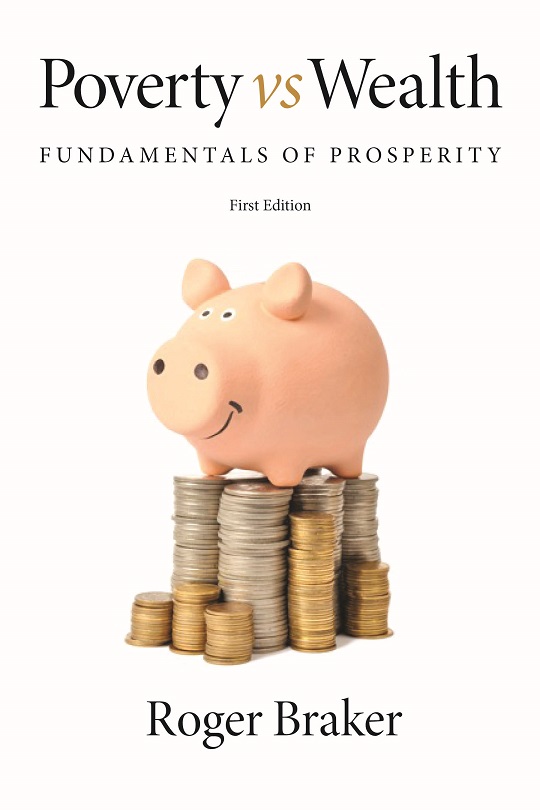
The idea for this group, The Prosperous Life, began with a desire to disseminate the information I had learned about prosperity.  As I learned, eventually I put the information in a book, Poverty vs Wealth, that is available on Amazon.

If you have a desire to learn more about prosperity, I suggest you start with this book.  Read the reviews on Amazon if you’d like to get a feel for what others thought of it.  I have included the forward here for you to consider:

Forward

The principles in this book took us years to learn, so have some patience with yourself if you are just starting.  Start in on the book, and as you see things that make sense put them into practice in your life.  Then reread the book and as you find more ideas that make sense, incorporate them as well.  If you put the principles of God’s Word into action, He will teach you if you want to know.

Here is a list of questions that we are going to attempt to answer as well as some cloudy areas that we will look at when it comes to money.

1.  Are tithing and giving the same?
2.  Is it easier for God to prosper self-employed people than salaried ones?
3.  If someone were to give you $10,000.00, what you would do with it?
4.  Does God expect us to save anything for the future?
5.  Why do some tithe and give, and yet prosperity seems to escape them?
6.  What are the differences between promises and warnings?
7.  Why are the warnings about money better known than the promises of prosperity?
8.  How do you “live within your means”?
9.  What if you lost it all?

There are invisible laws that make up the universe that we live in. There are laws of mathematics, chemistry, physics, gravity, airlift, and laws that cover the handling of money.  You cannot touch, taste, feel, see or hear them, but they work none the less. The laws of money work the same way every time just as the laws of mathematics do.

We are not going to cover where to invest your money or what kind of markets to be in.  We also are not going to cover making money, but we are interested in the fundamentals of prosperity, on handling the money that we do have.  The fundamentals of prosperity have nothing to do with what kind of job we have, who we work for, or who our parents are.

Many people look for prosperity in books and seminars. They try flipping real estate, reading positive thinking books, and try reading how the rich think.  They start at the wrong end of the subject.  Even if they end up making a large amount, they may easily lose it all because of a lack of the fundamentals.  These fundamentals of prosperity are essential to a prosperous life. Without an understanding of these fundamentals of prosperity, you could have a pro sports contract, inherit the money, win the lottery, or find gold coins buried in a milk can, but you may end up losing it all and living in poverty with no hope of ever regaining it. With an understanding of the fundamentals of prosperity, you can become very prosperous without a pro sports contract and have a good chance of keeping it.

My heart’s desire is that it will benefit you far beyond what you can imagine.

If you have read it, I would be very blessed to know how the principles in it impacted your life.

Roger B.

Do you have a Storehouse?


I have given (tithed) all my life.  But I have also been frustrated with the level of prosperity in my life. I have heard many reasons for this, but a few years ago I began to see the problem.

God, without a doubt, blesses our lives back as we give, BUT he expects us to SAVE part of the surplus as it comes in.  You might say, “I have no surplus,” but that is because we spend everything He gives us and then some.  That is not good stewardship of the supply God provides back to us as we give.  There is more understanding to be gained from God’s Word about finances than learning to give only.

There is a law or principle that God set up from the beginning that works for all that apply it.  Saint and sinner alike as some might say.  It says that to those that hath, more shall be given.

Luke 19:12-26 He said therefore, A certain nobleman went into a far country to receive for himself a kingdom, and to return. And he called his ten servants, and delivered them ten pounds, and said unto them, Occupy till I come. But his citizens hated him, and sent a message after him, saying, We will not have this man to reign over us. And it came to pass, that when he was returned, having received the kingdom, then he commanded these servants to be called unto him, to whom he had given the money, that he might know how much every man had gained by trading. Then came the first, saying, Lord, thy pound hath gained ten pounds. And he said unto him, Well, thou good servant: because thou hast been faithful in a very little, have thou authority over ten cities. And the second came, saying, Lord, thy pound hath gained five pounds. And he said likewise to him, Be thou also over five cities. And another came, saying, Lord, behold, here is thy pound, which I have kept laid up in a napkin: For I feared thee, because thou art an austere man: thou takest up that thou layedst not down, and reapest that thou didst not sow. And he saith unto him, Out of thine own mouth will I judge thee, thou wicked servant. Thou knewest that I was an austere man, taking up that I laid not down, and reaping that I did not sow: Wherefore then gavest not thou my money into the bank, that at my coming I might have required mine own with usury? And he said unto them that stood by, Take from him the pound, and give it to him that hath ten pounds. (And they said unto him, Lord, he hath ten pounds.) For I say unto you, That unto every one which hath shall be given; and from him that hath not, even that he hath shall be taken away from him.

In Matthew 13 Jesus Christ is explaining the parable of The Sower and the Seed and states this principle or law again.  Here, he uses it in the context of understanding.

Matthew 13:10-13 And the disciples came, and said unto him, Why speakest thou unto them in parables?  He answered and said unto them, Because it is given unto you to know the mysteries of the kingdom of heaven, but to them it is not given. For whosoever hath (understanding), to him shall be given, and he shall have more abundance: but whosoever hath not (understanding), from him shall be taken away even that he hath. Therefore speak I to them in parables: because they seeing see not; and hearing they hear not, neither do they understand.

So, we see Jesus teaches this law/principle in the context of both money and understanding.  That is because it is a law that God established from the beginning, and Jesus is teaching us how it works. A practical example of this law in action is:

Deuteronomy 28:8 The LORD shall command the blessing upon thee in thy storehouses, and in all that thou settest thine hand unto; and he shall bless thee in the land which the LORD thy God giveth thee.

A storehouse would be a place where a person or kingdom stored the surplus they had.

Storehouses are spoken about all through the Bible.  They are called barns, treasuries, storehouses and armories. They stored food, oil, wine, horses, chariots, gold and silver and precious stones.  David stored material for Solomon to use to build the Temple.  Nehemiah stored things in the temple’s treasure houses.  God has a great many things stored up also.  Therefore, He never runs out of blessings for His people. God is a God of abundance not a God of scarcity.

Joseph stored grain in the great storehouses of Egypt against the famine that was to come.  The verse that I first saw this in was in Proverbs 3.

Proverbs 3:9-10 Honour the LORD with thy substance, and with the firstfruits of all thine increase: So, shall thy barns (storehouses) be filled with plenty, and thy presses shall burst out with new wine

First, we give and then as the surplus comes back, God expects us to save part of it.  So prosperity includes both giving and saving! How much?  There is no set amount spoken of in God’s Word.  Joseph saved 20% each year.  If you are in great debt, start with a dollar.  But start.  If God is to command His blessing upon your storehouse (bank account) you must have one!  He can even bless a dollar if that is all you can start with.

It was this verse in Proverbs 3 where I realized that I had honored the Lord with the first fruits of my increase all my life (tithed), but I did not have a barn/storehouse for Him to fill. We are not only to believe the Word, but also, we are to do it. Once I understood that God expected us to save part of what comes in, my wife and I opened some new savings accounts. So, we had believed and done the first part, but we had not believed nor prepared to do the second part of providing a storehouse.

What happened over time was amazing.  Where we had had trouble paying our bills, even though we gave all our lives, they now became easier to pay.  As our storehouses grew, our understanding of the biblical principles of finances grew also.  It was amazing! Saving part of the surplus shows good stewardship of God’s blessing.  It is not all spent.  Once God sees that you will be faithful in stewarding and saving the small amounts, the amounts you have to save will grow as will your understanding of how to biblically deal with money.  He will teach you as you are willing and desiring to learn.

Jesus taught:  To them that hath more shall be given.  God said He would command His blessing on what you HAVE.  So, decide today to HAVE!  Open a savings account to put money in that you will never spend for anything.  As you believe and do what God has said, expect Him to teach you more about money – your attitude, how to handle what you have and how to get out of debt.  Expect Him to teach you, to walk with you in this whole area of finance, and you will experience much more of The Prosperous Life.

The Wealth of the Sinner is Laid up for the Just

Proverbs 13:22 A good man leaves an inheritance to his children’s children, but the sinner’s wealth is laid up for the righteous. ESV

This verse has two parts. A good man retains his wealth and leaves an inheritance to his grandchildren. The sinner loses his wealth, and his wealth is given to the righteous. Interesting.

This is not the only place in God’s Word that this idea of the sinner laying up wealth for the righteous is talked about. AND God gives us some examples of it.

Ecclesiastes 2:26 For to the one who pleases him God has given wisdom and knowledge and joy, but to the sinner he has given the business of gathering and collecting, only to give to one who pleases God. … ESV

Some examples of this would be: When Israel finally left Egypt, the Egyptians so much wanted to get rid of them they gave Israel most all their wealth and also the wealth that had been brought into Egypt during the famine in the days of Joseph. Then when Israel entered the promised land, God gave them houses they had not built, cities they had not walled, vineyards they had not planted and livestock they had not raised.

None of this was earned by their labor. God gave them this wealth that had been laid up by the sinners.

When God created the heavens and the earth, He put the resources into the earth for His family to use. He had no idea that Adam would hand the dominion of the earth over to the devil, but Adam did that anyway. Now the devil, not owning the earth but being the god of it, makes sure his people, sinners of all sorts, have most of the resources. But God still owns the place, and God has stated that all that storing up of wealth that the sinners do, they are really laying it up for God’s family, His children. He intended for His children to have it in the first place!

We don’t pray and ask God to give us others’ wealth. He has plenty to go around. But we do need to believe that it is His will to prosper us, and if we receive a large sum, we say thanks and put it in the bank.

Another example would be in 2 Kings 6:24 and following. This is the record of the lepers at the gate. The record is too long to recount here, but the wealth of that occupying army was given lock, stock and barrel to Israel.

These people did not earn the money or the wealth. It is common to feel that if you did not physically earn the money, you don’t deserve it. Then you might try to give most of it away so your conscious is clear and comfortable. Yet God says the wealth of the sinner is laid up for the just – the righteous. For you, His child. You may need to change your mind – your thinking.

It might be good to put these records in your believing so that if something like that ever happens to you, you can just be thankful. Thankful and stick it in the bank!

There are other records in the gospels where God gave Peter and Jesus the money to pay their taxes. Matthew 17:26.

Then there is the record of Peter and Jesus and the fishing boats. In Luke 5:3-8, they got so many fish the boats began to sink. And in John 21:5, the net broke.

These men were not going to eat all those fish. They took them to market and sold them. They had quite a great haul of fish. The money allowed them to not have to work for a while, so they could attend upon the things of God. But it was an unusually large amount of fish and thus money.

For this to work for them, they had to be comfortable with receiving a large sum of money, and they had to be comfortable handling it.

For us today that might be like a sports contract, winning the lottery, getting a job that pays say four times what we are used to or receiving an inheritance.
Peter was a fisherman, so God gave him the money through his work. But the sad thing is many times people will just give it away. This is legendary with lottery winners.

Why would they get rid of the money? Some would ask:

Why me? Others need this more than I do.
The money could cause feelings of guilt; guilty that you received it but not others you know, such as a returning veteran that was the only one who lived after an encounter with the enemy.
The money could cause feelings of fear of your friends finding out about the amount you now have.
Some might feel that it is was gained by them unfairly, or that others would perceive it to be so.
Some might have feelings of insecurity or feel they did not deserve it because they did not earn it. Or feel it was way above what they consider normal for their station in life.

Possibly the greatest reason people get rid of money is because they are not comfortable with the amount. All of a sudden, they are out of their comfort zone. This can be very subtle and disturbing. I learned several years ago that most of us unknowingly have an amount of money we are comfortable with. Anything over that, and we get rid of it. We give it away, spend it, etc. Once it is gone, now we are at a level where we are comfortable again. The amount that I was comfortable with was so small it was embarrassing.

What can you do to prepare yourself to be responsible with large amounts of money? The verse: Faithful in little, faithful in much comes to mind…

Luke 19:17 And he said unto him, Well, thou good servant: because thou hast been faithful in a very little, have thou authority over ten cities.

Learn to manage your money wisely. Wealth comes as a result of financial literacy.
Some suggest giving 10%, saving 10% and investing 10%. But at least get started, and watch your believing grow.
Ask God to teach you how to handle what He gives to you. You may need to find a mentor, read some books and most of all change your mind about money. It is work, but it is also extremely rewarding.
Set up some protocols for unexpected money coming in. An example: tithe 10%, spend 10% and save 80%!
Some set up categories for each account. (More on this in the book Poverty vs Wealth)
Remember, the money saved by Pharaoh saved the lives of the Egyptians and the land of Canaan.

Lastly, remember the verses that say, “Unto him that hath more shall be given….” This expression is used of both understanding and with money. The more you increase your understanding of money with a biblical foundation, the more understanding God will give you. The more you increase your understanding of money and utilize those principles, so that you have more money, the more God can trust you with.

Remember, God said that He wishes above all things that you prosper and be in health even as your soul prospers.

Learn to save and expect God to prosper you according to His word so that you too can give an inheritance to your grandchildren.

Learning is an exciting adventure, and it is all part of The Prosperous Life.